
An Appetite for Connection
Memory lives in the stomach as much as the mind. As I've grown into adulthood, cooking has become my anchor in times of uncertainty—a practice that connects palate - past and present.

The meals of my childhood, prepared by different hands with different intentions, have shaped not only my palate but my understanding of love and care. In creating meals for my own family now, I find myself channeling the spirits of those who fed me: my mother's practicality, my father's creativity, my stepmother's precision. These dishes have become more than sustenance; they are time machines, emotional touchstones, and the invisible threads that bind generations together. Through the simple act of feeding and being fed, we forge connections between our evolutionary brain—the stomach—and our emotional core, creating flavors that mark not just meals, but moments in a lifetime.
Sugar Mounds on Grapefruit
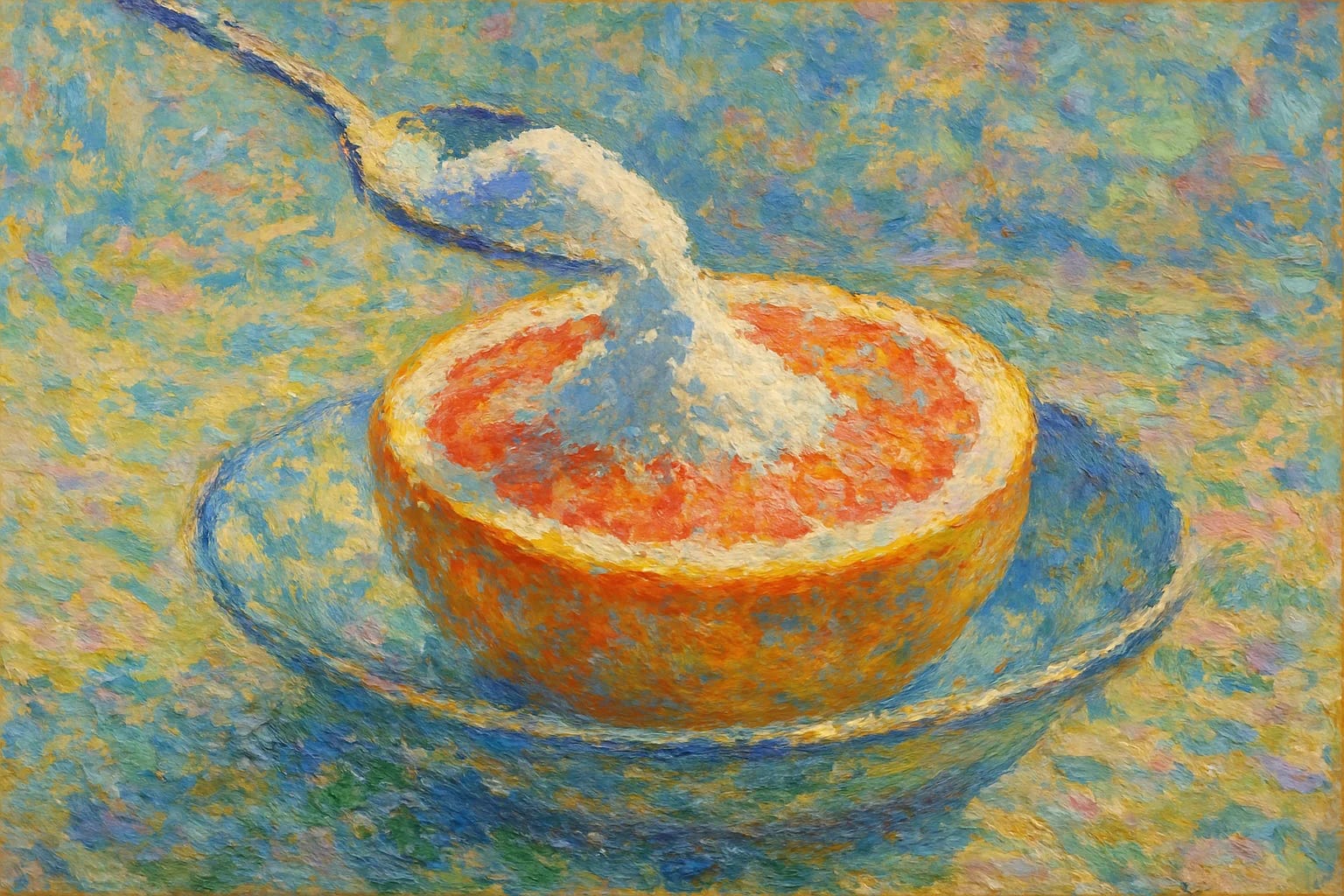
I always liked the cutting. I still do. The methodical line following, the resulting sense of achievement at a clean carve. The triangles that lift easily from the rind cup. I can't remember the age, but I was young. It was one of those overpowered flavors, introduced too early to be appreciated. High acid, sweeping tartness. I did like folding it and squeezing out the juice at the end. The sideways spray usually comes with a laugh. A thing eaten out of trust, or emulation. One half for her, one half for me. Par amour. Then the sugar was introduced. Bright white sugar, spooned and spooned on top of the flesh. An instrument for balancing the challenge. Making it more palatable, chemically more desirable. The lesson was lost on me, and I'm maybe only just beginning to grasp it now.
Meatsauce over Spaghetti (Mom's)
Mom's meatsauce existed in a realm of beautiful chaos—chunky with irregularity, studded with full rosemary sticks that required vigilant navigation with each twirl of the fork. It was cooking born of necessity rather than passion: something with protein, something filling, something that would stretch across days when time and money were equally scarce. The improvisation in each pot told its own story—what was on sale, what was left in the pantry, what could be transformed into sustenance. I didn't know then that I was learning resilience through pasta, that these meals cobbled together from whatever was available were teaching me how to make something from nothing, how to find satisfaction in the imperfect.
Dad's Mustard Cream Chicken with Rice
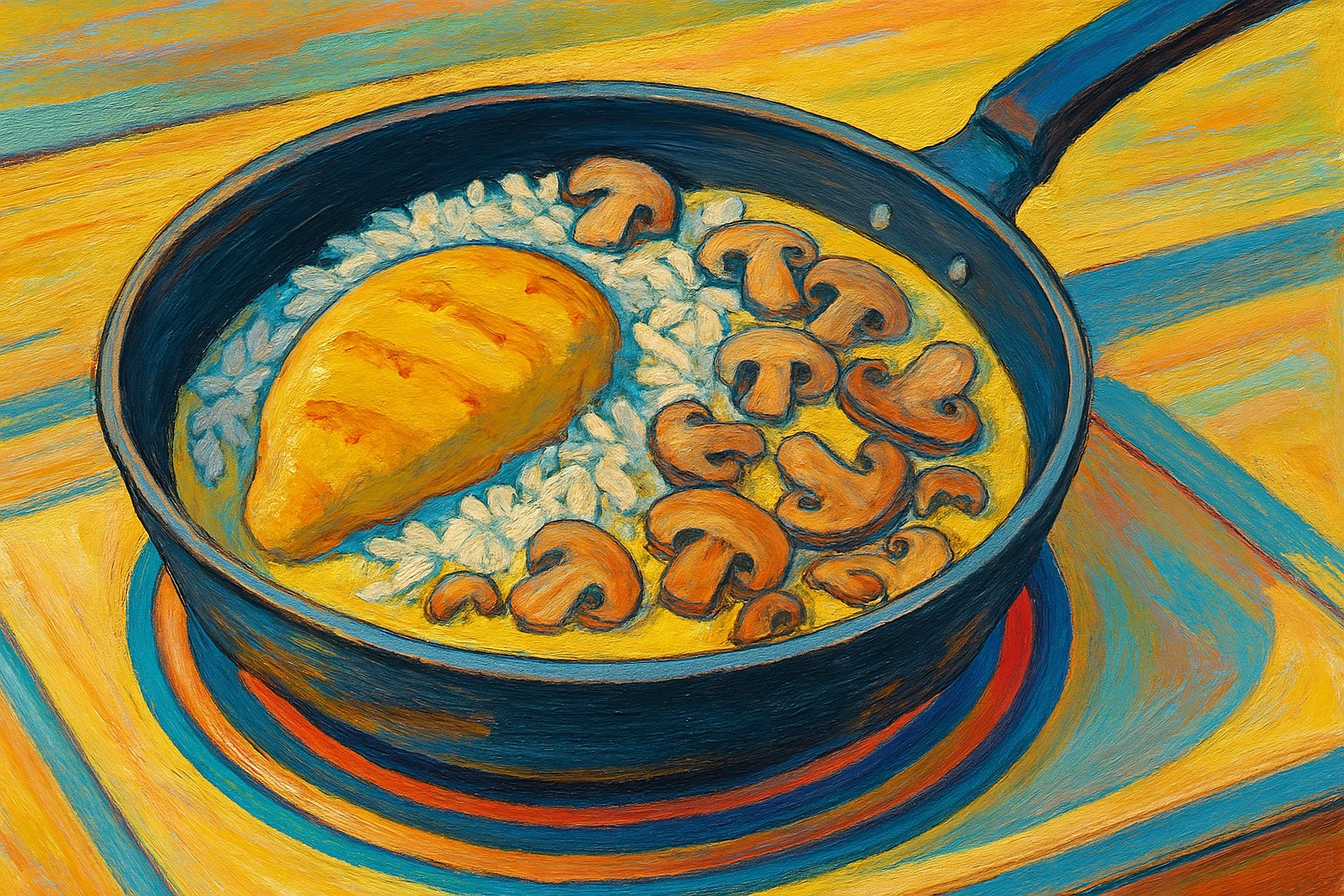
This was the dish that first made me curious about cooking, the one that made me linger in the kitchen to watch hands at work. Each iteration brought a small adjustment—a pinch more of this, a moment longer for that—creating a living recipe that breathed and evolved. The warm notes of clove nodded to my father's Haitian heritage, while the cream-mustard base and quickly sautéed mushrooms whispered of his fascination with French technique. Little did I know then that this early exposure to French culinary influence would plant a seed that would eventually draw me across the Atlantic to France, where those whispers would become a full conversation. It was fusion cooking before that term became fashionable, a culinary autobiography told in simmering sauce. When the plate arrived, the rice caught every drop of the velvety, earthy concoction, and I understood food as something beyond nourishment—as expression, as history, as tangible love.
Meatsauce over Rigatoni (Kathy's)
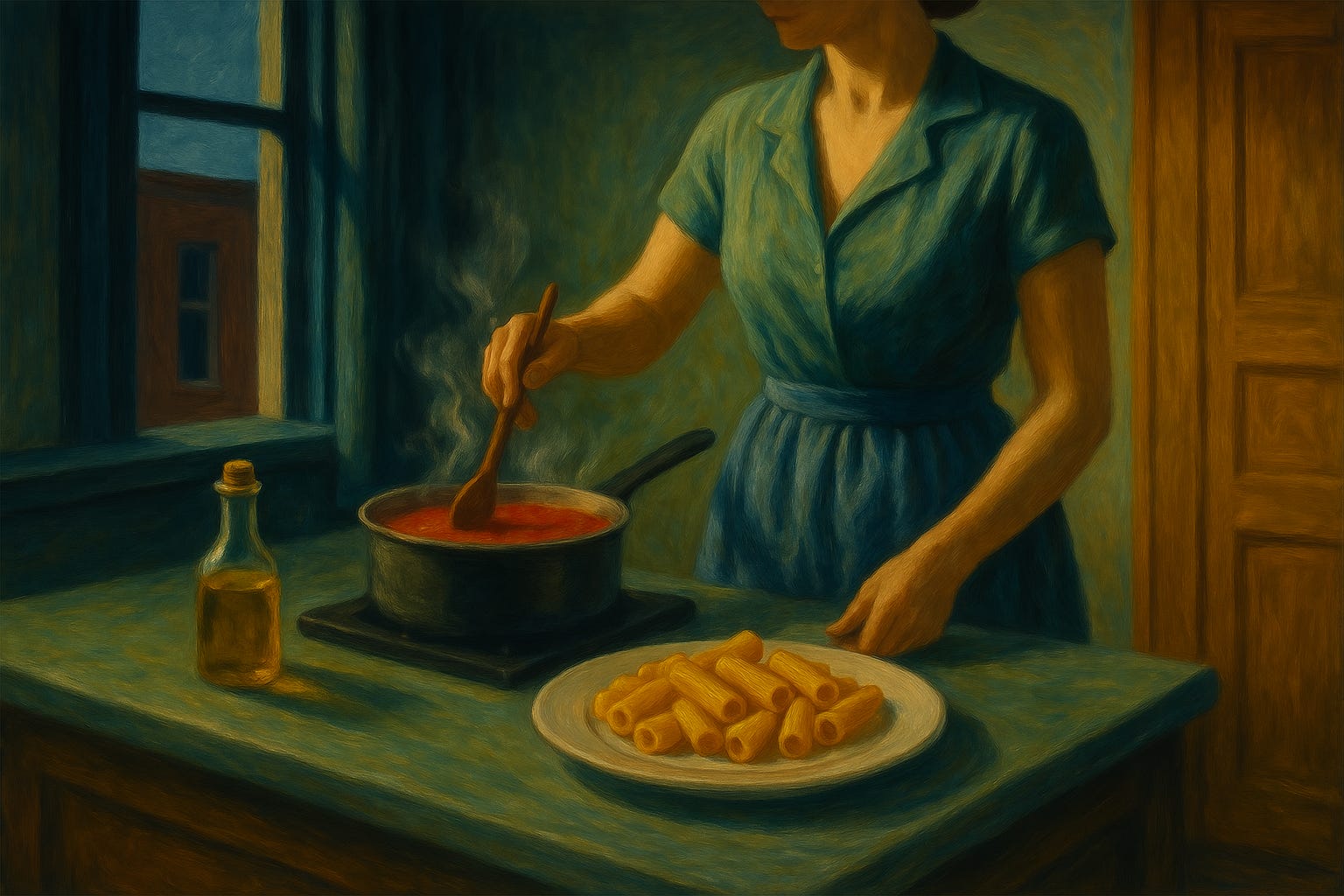
Where my mother's sauce was chaos, Kathy's, my stepmother, was precision—smooth and surprisingly sweet, the product of cooking school techniques and measured ingredients. She would grate fresh parmesan in thick, generous layers that melted slightly into the hot pasta, creating pockets of salty intensity. There was ritual in its preparation and anticipation in its arrival, the house gradually filling with a perfume that promised comfort. Sometimes she'd set aside portions for later meals, teaching me that love could be stored, preserved, relayed across time. The sauce wasn't just made; it was crafted with intention, each ingredient considered rather than merely included—a different kind of care, but care nonetheless.
Mom's Green Salad
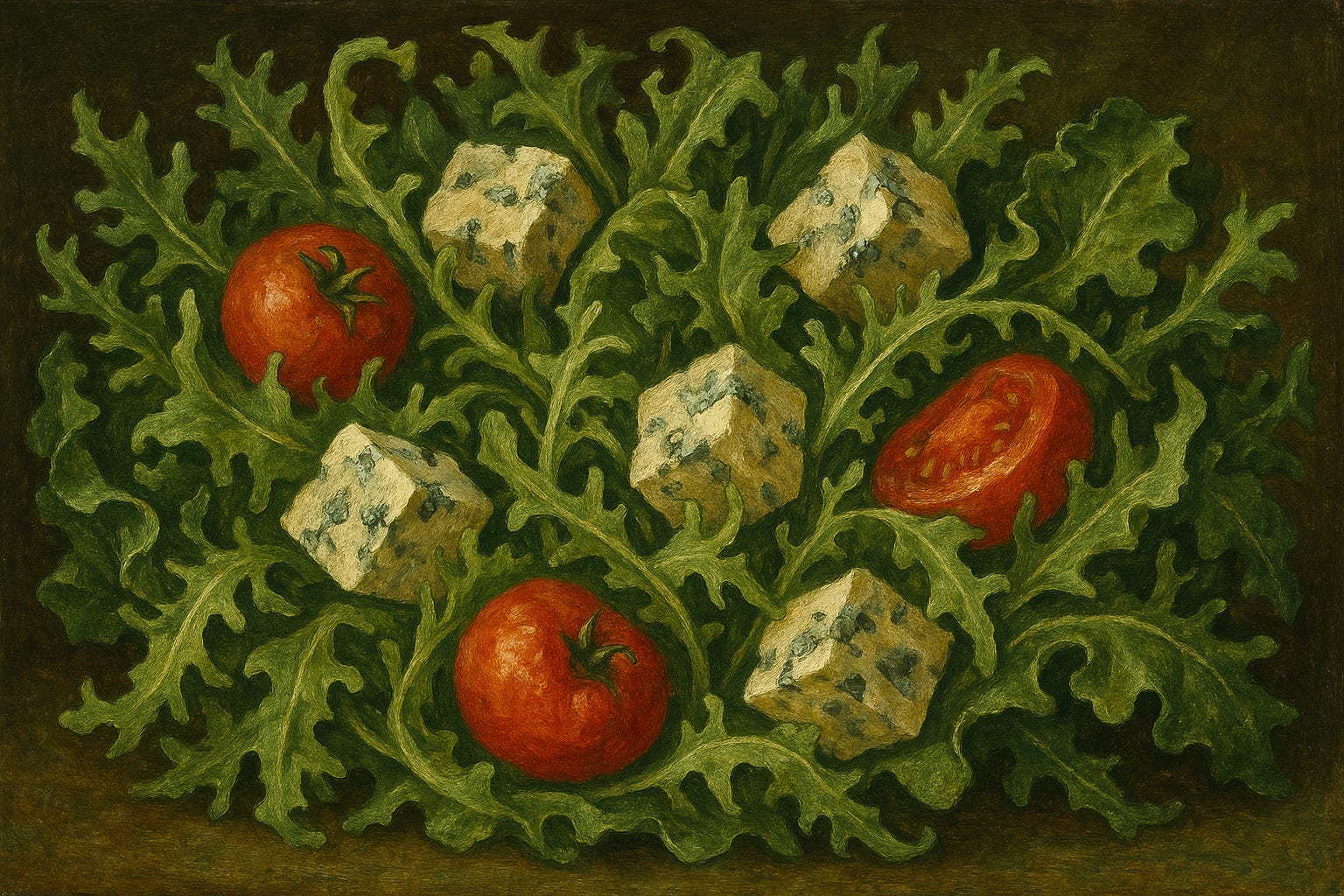
It arrived before me like a gauntlet thrown: blue cheese that assaulted my palate, bitter greens that chewed like punishment, hunks of tomato and occasional slivers of red onion that felt like obstacles to overcome rather than pleasures to ingest. This was adult food, unapologetically sophisticated and utterly uninterested in pandering to childish tastes. I danced back and forth with this challenge for years—sometimes avoiding it entirely, sometimes forcing down reluctant bites, occasionally discovering surprising moments of enjoyment. I didn't know it then, but this salad was stretching me, preparing me for a world of flavors beyond the simple and sweet, teaching me that sometimes the most rewarding tastes require persistence and an evolving palate.
Dad's Beef Stew
Perfection has a smell, and it's the aroma of my father's beef stew simmering on a winter afternoon. This was the meal that inspired anticipation so intense it bordered on physical pain—something I'd look forward to for days, something I'd happily eat for breakfast if permitted. It reached its apex after a night of sitting, the flavors deepening, marrying, whispering secrets to each other in the darkness of the refrigerator. The crowning glory came with a generous spoonful of my grandmother's Haitian pikliz—that vibrant, spicy pickled cabbage that cut through the richness and connected generations. In that bowl existed a bridge between worlds: my father's American present and Haitian past, my grandmother's traditions and our modern kitchen, the simple ingredients and their transcendent transformation.
BBQ Crispy Hot Dogs with Kathy
The mastery wasn't in complexity but in timing—that perfect moment when the hot dog developed its crackling exterior while remaining juicy within. These meals marked the arrival of summer, of long days stretching into golden evenings. While Kathy orchestrated the grill, I would trace labyrinthine patterns on my bike through the neighborhood, returning breathless when called for dinner. The simplicity of these meals belied their significance; they were markers of season, celebrations of freedom, punctuation marks in the long sentences of childhood summers. Between rides to the Riverside Park synthetic fields where I drilled my craft (and scarfed down insanely good cheese empanadas) and bites of perfectly charred hot dogs, I was learning the rhythm of seasons, the pleasure of traditions that return like faithful friends.
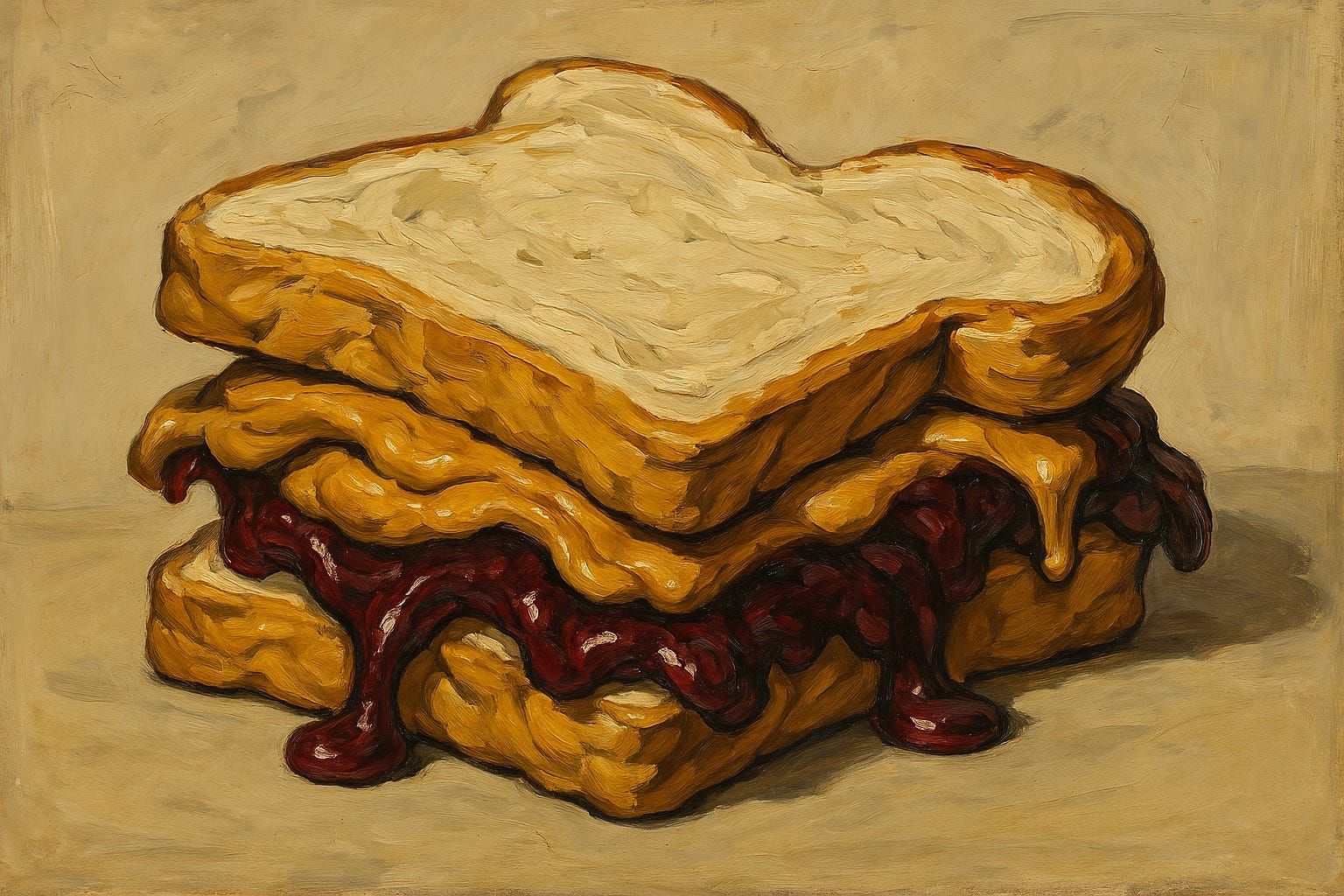
Peanut Butter and Jelly
Sometimes single-stacked, at times doubled, these sandwiches represented sustenance in its most honest form—salty and sweet, filling and familiar. The texture of the bread (never too soft, never too dry), the perfect creaminess of Skippy peanut butter, the predictable sweetness of grape jam (strawberry on adventurous days)—these elements combined into more than a sandwich. They became fuel for crucial moments of hunger, talismans of my growing autonomy as I learned to prepare them myself. Years later, in a moment of delicious irony, this humble sandwich became my first order at a New York hotel when meeting my future wife's mother and sister, paired with a glass of milk that transported me instantly back to childhood. Now I serve this same meal to my own children—though with organic peanut butter, artisanal jelly, and almond milk to acknowledge the passage of time—and watch as they create their own associations with this simple alchemy of flavors.
Haitian Food
In New York City, our geography of love was mapped in take-out joints—Le Soleil, Krik Krak, DjonDjon—names that became weekly rituals. Those aluminum tins with white lids arrived like treasure chests: griot with its perfect crunch, poulet frit that redefined fried chicken, stewed beef that surrendered to the fork, crisp acra fritters, lambi (though I never liked the stuff), and fried plantains with red beans and rice crowned with brown bean sauce and electric pikliz. These weren't just meals but half my genetic makeup served to-go.
I sometimes suspected my father signed me up for that soccer team in his old Elmont neighborhood solely to create weekly excuses for Haitian takeout. My best friend's mother eventually became our caterer, her fried chicken creating a new standard for perfection that holds to this day. Now, living in Lyon—a city renowned for its gastronomy—I find myself dreaming of these impossible-to-find flavors. The distance has transformed them from weekly comfort to precious rarity, treasures to be savored during visits home, reminders that some hungers can only be satisfied by returning to your roots.
La (faim) fin
Food marks time in ways calendars can’t. From childhood grapefruit halves to collaborating with Michelin-starred chefs in Lyon, food maps a life. As I noted in my breakfast ritual article, these daily acts of nourishment anchor our family schedule and create necessary moments of connection. Each dish I prepare carries imprints—my mother's pragmatism, my father's Haitian influence, my step mother’s technique—while we simultaneously forge our own traditions. Whether adapting my father's mustard chicken or stacking PB&J’s for my little French people, I've come to recognize that consistency matters more than perfection. The meals themselves fade, but the habit of gathering and sustaining will always matter.

⏰
The thing about time
Is there are no guarantees.
Come quakes, love, war, peace.

Threats unknown aside
Your wisdom, your inner fire
These things don’t expire.

So wake on this day
And give everything, your all
Dawn, noon, night. Stand tall.

‘Cause between sunshine
And rain, still we wake, somehow -
With only right now.